

The Hidden Cost of Breakdown Repairs: Why Reactive Maintenance Is Holding South African Manufacturers Back
Unplanned breakdowns in manufacturing plants often catch managers and engineers off guard. The immediate reaction is to fix the problem as quickly as possible to resume production. Yet, this reactive approach carries costs far beyond the repair bill. In South Africa’s manufacturing sector, where operational efficiency is critical to competitiveness, breakdown repairs represent the most expensive way to maintain a plant. This article explores why breakdown repairs are costly, the impact on production and quality, and how preventive strategies and automation can reduce these expenses.
The True Cost of Unplanned Downtime
When a machine breaks down unexpectedly, production halts. This unplanned downtime directly affects output and revenue. In South African plants, where margins are often tight and demand fluctuates, even short stoppages can have significant consequences.
Lost production time: Every minute a machine is offline reduces the plant’s overall equipment effectiveness (OEE). OEE measures availability, performance, and quality. A breakdown lowers availability, dragging down OEE and plant productivity.
Overtime and labour costs: To catch up on lost production, plants often resort to overtime shifts. This increases labour costs and can lead to worker fatigue, raising the risk of further errors or accidents.
Delayed deliveries: Customers expect timely deliveries. Breakdowns can cause delays, damaging relationships and potentially leading to penalties or lost contracts.
For example, a Pretoria-based manufacturer of automotive components experienced a critical conveyor belt failure. The unplanned downtime lasted six hours, resulting in a 15% drop in daily output. To meet delivery deadlines, the plant scheduled overtime for two days, increasing labour costs by 20%. This incident illustrates how breakdowns ripple through operations beyond the initial repair.
Repeat Failures and Root Cause Analysis
Breakdown repairs often address symptoms rather than causes. Without thorough root cause analysis (RCA), the same failure may recur, compounding costs.
Temporary fixes: Quick repairs may restore function but leave underlying issues unresolved. This leads to repeat breakdowns and escalating maintenance expenses.
Increased mean time to repair (MTTR): Without understanding the root cause, technicians spend more time troubleshooting and fixing recurring problems.
Reduced mean time between failures (MTBF): Repeat breakdowns shorten the interval between failures, increasing downtime frequency.
A South African food processing plant faced repeated motor failures on a packaging line. Initial repairs replaced worn bearings, but failures continued. A detailed RCA revealed misalignment caused by foundation settling. Correcting the foundation improved MTBF from two weeks to three months, reducing downtime and repair costs.
Quality Issues Linked to Breakdown Repairs
Breakdowns can also affect product quality. Machines operating under stress or after hurried repairs may produce defective goods.
Inconsistent output: Equipment not running at optimal conditions can cause variations in product dimensions, weight, or composition.
Increased scrap and rework: Defects lead to higher scrap rates and rework costs, reducing profitability.
Customer dissatisfaction: Poor quality damages brand reputation and may result in returns or lost business.
For instance, a Gauteng-based plastics manufacturer noticed an increase in rejects after a gearbox failure on an extrusion line. The repair restored operation but did not fully address vibration issues. The resulting quality problems cost the plant 5% of daily production in scrap.
Preventive Maintenance as a Cost-Effective Alternative
Preventive maintenance (PM) aims to avoid breakdowns by regularly servicing equipment based on time or usage intervals. While PM requires upfront investment, it reduces the likelihood of costly breakdowns.
Improved MTBF: Regular inspections and part replacements extend equipment life and reduce failure frequency.
Lower MTTR: Well-maintained machines are easier to repair, shortening downtime.
Better planning: Scheduled maintenance allows for resource allocation and minimal disruption to production.
In South Africa, where skilled maintenance personnel can be scarce, PM helps avoid emergency call-outs and overtime. A metal fabrication plant in Johannesburg implemented a PM programme for its presses. Over 12 months, breakdowns dropped by 40%, and OEE improved by 10%.
The Role of Automation and PLCs in Maintenance
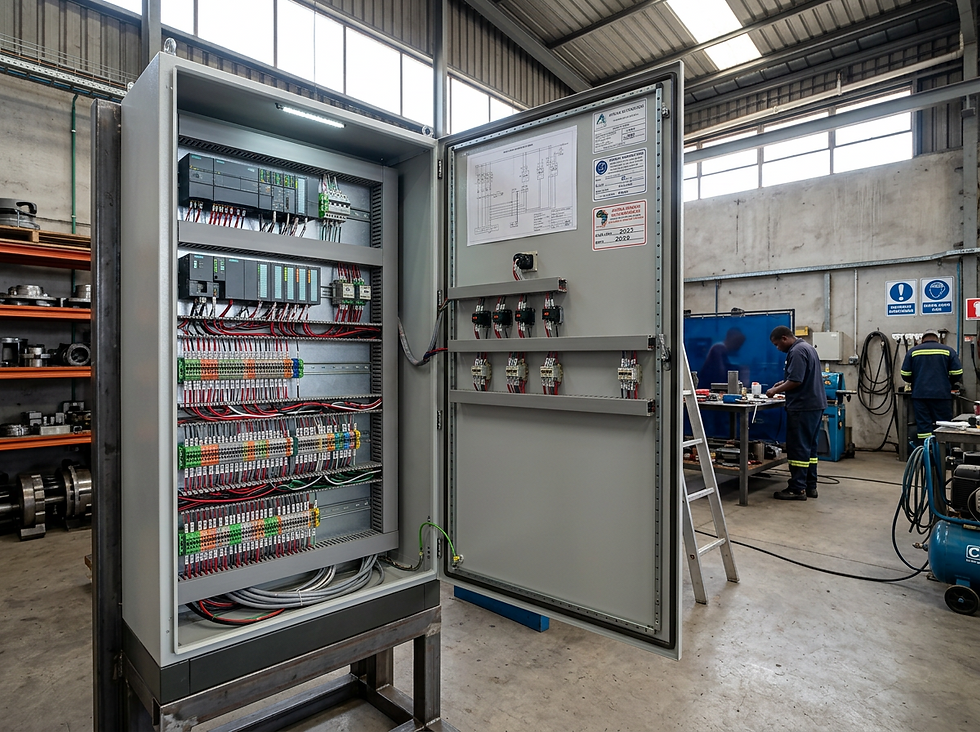
Automation and programmable logic controllers (PLCs) play a vital role in reducing breakdown costs. They provide real-time monitoring and control, enabling early detection of issues.
Condition monitoring: Sensors connected to PLCs track parameters such as temperature, vibration, and pressure. Alerts trigger before failures occur.
Data-driven decisions: Automation systems collect data that maintenance teams can analyse to schedule interventions more effectively.
Remote diagnostics: PLCs allow technicians to diagnose problems remotely, reducing response times.
For example, a chemical plant near Durban integrated PLC-based monitoring on its pumps. Early warnings of bearing wear allowed maintenance to schedule repairs during planned downtime, avoiding unplanned stoppages.

.
Measuring Maintenance Performance: MTTR, MTBF, and OEE
Understanding maintenance metrics helps plant managers make informed decisions.
Mean Time to Repair (MTTR) measures the average time to fix a failure. Lower MTTR means faster recovery.
Mean Time Between Failures (MTBF) indicates the average operational time between breakdowns. Higher MTBF reflects better reliability.
Overall Equipment Effectiveness (OEE) combines availability, performance, and quality to assess plant productivity.
Tracking these metrics reveals trends and highlights areas needing improvement. For example, a plant with high MTTR and low MTBF may prioritise training or invest in better diagnostic tools.
Practical Steps to Reduce Breakdown Repair Costs
Plant managers and maintenance leaders can take several practical steps:
Implement a structured preventive maintenance schedule.
Train maintenance staff in root cause analysis techniques.
Invest in condition monitoring and automation technologies.
Use maintenance metrics to guide continuous improvement.
Collaborate with equipment suppliers for technical support and upgrades.
Reflecting on Maintenance Strategies in South Africa
South African manufacturing faces unique challenges such as fluctuating power supply, skills shortages, and cost pressures. These factors make breakdown repairs particularly costly. Yet, adopting preventive maintenance and automation can significantly reduce unplanned downtime and improve plant reliability.
Maintenance is not just about fixing machines but ensuring the entire production system runs smoothly. By shifting from reactive to proactive maintenance, plants can save money, improve quality, and meet customer demands consistently.
The hidden costs of breakdown repairs extend beyond the workshop. They affect every part of the manufacturing process. Recognising this reality is the first step towards building more resilient and competitive plants in South Africa and beyond.



Comments